What is VRTX on a Vizio Sound Bar?
If you just bought a Vizio sound bar and saw “VRTX” on the box or the model number, you are not alone in wondering what it means. It is not a special audio mode or a separate technology. VRTX is simply the model code prefix that Vizio uses to identify a specific generation of its V-Series sound bars. For example, a sound bar labeled V214x belongs to the VRTX family. This code tells you which hardware version and feature set you are getting, especially when compared to older V-Series models or other series like M-Series or Elevate. In this article, I will walk through exactly what VRTX means, how it changes the audio experience, how to set it up, and common misunderstandings that I have seen people run into. I have owned a V214x myself and helped friends with theirs, so I am sharing what I actually learned.
VRTX Is a Model Code, Not a Feature

The first thing to clear up is that VRTX is not something you turn on or off. It is a combination of letters that Vizio uses to mark a product family. Think of it like “iPhone 14” versus “iPhone 13” – the name tells you the generation, not a specific app. The “X” stands for “cross” or “next gen” in Vizio’s internal naming, but on the box it just means you have the current iteration of the V-Series. When you see “VRTX” in the product title on a store website, it is the same as “V-Series 2.1 Sound Bar.” The product page might say V214x, which is the full model number. The “214” refers to the year and configuration (2 speakers, 1 subwoofer, 4 channels in total), and the “x” is the variant. So VRTX is the shorthand for that whole family.
What Makes the VRTX Different from a Standard V-Series?
If you owned an older V-Series bar, like the SB3820, you might notice a few differences in the VRTX models. The main changes are:
- Lower profile design – The VRTX sound bar is shorter in height, so it does not block the bottom of your TV screen, even if your TV sits on a table.
- Wireless subwoofer pairing – The subwoofer connects automatically out of the box. No wires between the bar and the sub.
- DTS Virtual:X built-in – This is the virtual surround sound processing that creates the feeling of speakers around you without rear speakers.
- Dialogue EQ mode – A dedicated setting to boost voices, which was not available on older entry-level bars.
The table below compares a typical VRTX model (V214x) with an older V-Series model (SB3820-C6) to show the real differences.
| Feature | VRTX (V214x) | Older V-Series (SB3820) |
|---|---|---|
| Speaker channels | 2.1 (two full-range + sub) | 2.0 (two speakers, no sub) |
| Subwoofer | Wireless, included | None (separate purchase) |
| Virtual surround | DTS Virtual:X | None |
| Dialogue EQ | Yes | No |
| Bluetooth | Yes (music only) | Yes (music only) |
| Height (approx) | 2.2 inches | 3.5 inches |
How the VRTX Configuration Affects Audio Performance
The VRTX sound bars deliver 95dB of total sound pressure level from two full-range speakers and a wireless sub. That is loud enough for a living room up to about 400 square feet. The subwoofer goes down to 50Hz, which gives you chest-thump bass without rattling the walls too much. But the real trick is DTS Virtual:X. It uses psychoacoustic processing to make you think sound is coming from above and behind you. It does not create actual height channels – I will cover that myth later – but it does widen the soundstage. When I watch action movies, explosions feel wider than the sound bar itself, and voices stay clear in the center. One thing I noticed: you need to enable DTS Virtual:X manually on the VRTX bar. It is not on by default. Press the “Virtual:X” button on the remote (the one with the crossed arrows icon) to turn it on. The front light will blink twice to confirm.
Setup and Optimization Guide for the VRTX Line
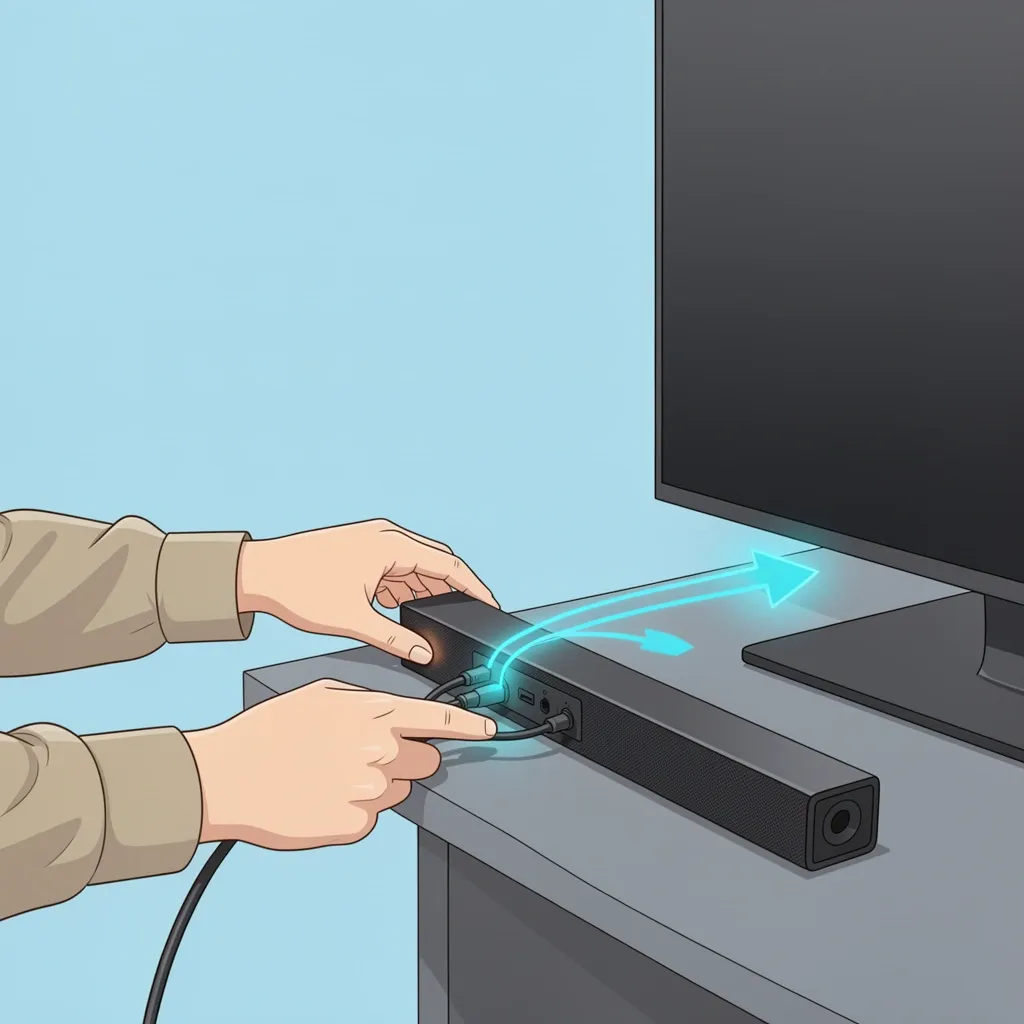
Setting up a VRTX sound bar is straightforward, but I have seen a few gotchas that cause “no sound” issues. Here is the exact process I use:
- Unbox and connect the subwoofer. Place the sub within 20 feet of the sound bar. Plug both into power. The sub and bar pair automatically within a few seconds. If they do not, press the “Pair” button on the back of the sub and then hold the “Bluetooth” button on the sound bar remote until the light turns solid.
- Connect to the TV. Use the included optical cable or HDMI ARC. Optical is simpler: plug one end into the sound bar’s optical input, the other into your TV’s optical output. If your TV has HDMI ARC, use that instead – it allows volume control with the TV remote. Connect the HDMI cable to the bar’s HDMI ARC port and the TV’s HDMI ARC port.
- Set the TV audio output. This is the step most people miss. On your TV, go to Settings > Audio > Output and set it to “External Speakers” or “Soundbar.” Then change the audio format to “PCM” or “Bitstream” (try PCM first for compatibility).
- Turn on DTS Virtual:X. Press the Virtual:X button on the remote. The bar will remember this setting even after power off.
- Adjust dialogue clarity. Press the “Dialog” button on the remote to cycle through modes: Off, Low, High. I keep it on Low for most content, High for news or podcasts.
The “No Sound” Fix: Why Your VRTX is Silent
If you get no audio after setup, the most common cause is the TV output setting. Make sure the TV is set to “Optical” or “HDMI ARC” as the audio source, not “TV Speakers.” Also check that the optical cable is pushed in all the way – it clicks when seated. If you are using HDMI ARC, confirm that HDMI-CEC is enabled on the TV (often called “Anynet+”, “Bravia Sync”, or “Simplink” depending on brand).
What VRTX Does NOT Do (Common Misconceptions)
I have seen forum posts and Reddit comments where people assume VRTX gives them Dolby Atmos height channels or that it is a 3.1 system. Here is what VRTX does **not** do:
- It does not have physical up-firing speakers. DTS Virtual:X simulates height, but you will not hear sounds coming from above the same way a real Atmos system does. It is a convincing trick, not true overhead audio.
- It is not a 3.1 system. Despite Vizio’s product page sometimes saying “3 speakers” (they count the sub as one), the bar itself has two full-range speakers – left and right. There is no center channel. Dialogue comes from the left and right speakers combined.
- Bluetooth is for music only. You cannot stream TV audio via Bluetooth. The Bluetooth connection is for playing music from your phone or tablet. For TV audio, you must use optical or HDMI.
- It does not pass through 4K video. The VRTX bars have no HDMI input – only HDMI ARC output. That means if your source (like a streaming stick) plugs into the TV, the sound bar will not interfere with video. But you cannot connect a source directly to the bar.
Frequently Asked Questions
Does the VRTX sound bar support 4K video passthrough?
No. The VRTX sound bar only has an HDMI ARC port for audio out. There is no HDMI input for video. All video goes straight from your device to your TV. The sound bar only handles audio.
Can I use the VRTX sound bar with a non-Vizio TV?
Yes. It works with any TV that has an optical or HDMI ARC output. The bar does not require a Vizio TV for any features. I have used mine with a Sony and a TCL without issues.
What does the “X” in VRTX stand for?
Vizio does not officially state it, but based on their naming patterns, the “X” likely stands for “cross” (as in crossover between series) or “next generation.” In the model number V214x, the “x” indicates variant. It is not “extreme” or “X-ray.”
Is the subwoofer for the VRTX replaceable if lost?
The subwoofer uses a proprietary wireless pairing protocol. You cannot use a standard third-party sub. If you lose or break the sub, you need to buy the exact replacement model (e.g., Vizio V-Series subwoofer for V214x). Check Vizio’s support site for part numbers. In my experience, it is easier to buy a whole new sound bar kit than find a replacement sub alone.
How do I reset my VRTX sound bar to factory settings?
Unplug the sound bar from power. While unplugged, press and hold the “Volume Down” button on the bar itself (not the remote). Keep holding it while you plug the bar back in. Hold for 10 seconds until the light blinks rapidly. Release. The bar will reset and re-pair with the sub automatically. This is everything I have learned from owning and helping others set up the VRTX models. If you have a Vizio sound bar with VRTX in the model number, you now know exactly what it is, how to use it, and what to avoid expecting.